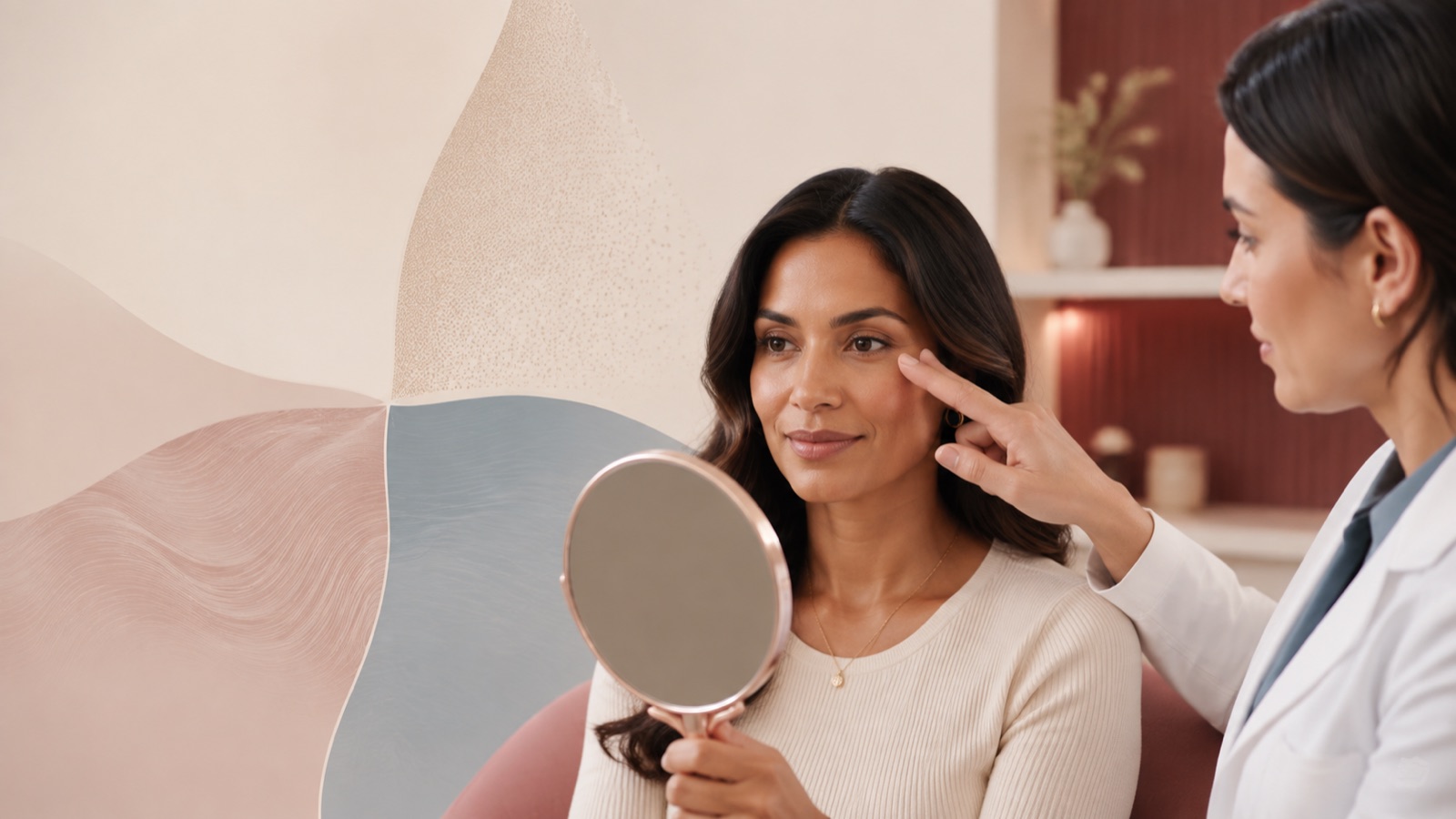
A recent injector thread on X triggered two reactions at once: “I want that under-eye result” and “I am too scared to try filler.” Both reactions skip the most important question. Is the thing you see a hollow, pigment, a true fat pad, or thin, crepey skin?
Under-eye treatments are not interchangeable. Filler can add volume to a suitable hollow; it does not remove a true eye bag or erase pigment. PRP/PRF research is promising for some texture and pigment outcomes but is not standardized. Lower blepharoplasty is surgery for structural bags. A consultation that does not name the underlying problem cannot give you a meaningful quote.
Why this question is trending now
Recent public X posts show women asking whether under-eye filler is worth the risk, saying they want treatment but feel afraid, and comparing U.S. appointments with Korean “skin booster” and polynucleotide menus. That is a genuine decision problem—but the posts are not evidence that any treatment works or is safe.
Trend signal, not medical evidence: representative public X discussions from August 30, August 30, and August 17, 2026. We used these posts to identify the question, then checked the claims elsewhere.
Start with the cause, not the treatment name
Hollow
A groove can cast a shadow. A product specifically labeled for infraorbital hollows may be one option for an appropriate patient.
Ask: Is this volume loss, and which exact product is approved for this site?
Pigment
Brown or blue-gray color may come from melanin, visible vessels, inflammation, or shadow. Adding volume will not treat every cause.
Ask: What changes when the light or skin is gently moved?
True bag
A projecting fat pad is not an empty space. More filler can camouflage selected contours, but it does not remove the bag.
Ask: Should an oculoplastic or plastic surgeon assess this before any injection?
Texture
Fine lines and crepiness are skin-quality concerns. PRP/PRF, resurfacing, or skincare may be discussed, but evidence and downtime differ.
Ask: What outcome is measured, after how many sessions, and for how long?
The price comparison that is actually supportable
The cleanest national benchmarks do not cover every trendy option. The American Society of Plastic Surgeons reports an average of $715 for hyaluronic-acid filler generally and $3,876 for lower blepharoplasty. The surgery figure is the surgeon’s fee; anesthesia, facility fees, tests, prescriptions, and other costs can be additional. Neither number is an under-eye quote.
Reviewed September 4, 2026. These are starting points for questions, not apples-to-apples package prices.
Turn every quote into a full-plan number
| Option | Price question | Often omitted |
|---|---|---|
| HA filler | Product, syringe size, expected amount, follow-up | Dissolving or correction visit |
| PRP / PRF | Per session × planned sessions | Preparation method and maintenance |
| Polynucleotide | Exact product × sessions | Whether it is legally marketed for this use in the U.S. |
| Surgery | Surgeon + facility + anesthesia + aftercare | Time off and revision policy |
Under-eye filler: product and location both matter
“Filler” is a category, not one approval. In 2023, FDA approved Restylane Eyelight for improving infraorbital hollowing in adults over 21. That does not turn every filler into an under-eye product or make every patient a candidate. Ask to see the exact product label and confirm that the intended location matches it.
The FDA says the most concerning filler risk is accidental injection into a blood vessel. Although uncommon, reported outcomes include tissue death, vision problems including blindness, and stroke. The agency advises choosing a licensed health professional trained in facial filler injection and treating filler as a medical procedure.
Before treatment, ask the injector to explain the clinic’s vascular-occlusion protocol and where emergency supplies are kept.
PRP and PRF: promising, but “natural” does not mean proven
A 2025 systematic review included 14 studies of platelet-rich plasma and platelet-rich fibrin for periorbital rejuvenation. It found signals of improvement in texture, wrinkles, and pigmentation, with mostly mild, temporary adverse effects. It also found inconsistent preparation methods, injection techniques, session schedules, and outcome measures. The authors could not conclude that PRF was superior to PRP, and long-term durability remained unclear.
That is why we do not publish a single national PRF price here. A one-session promotion is not comparable with a study protocol involving two, three, or four sessions. Ask for the whole series price and exactly how the product is prepared and delivered.
Polynucleotides and “salmon DNA”: get the product name
Social posts often collapse PDRN, polynucleotides, Rejuran, topical serums, microneedling add-ons, and injections into one trend. They are not the same product or route. Before comparing prices, ask the clinic to write down the brand, manufacturer, route of administration, and the U.S. FDA approval or clearance it relies on for that use. “FDA registered” is not the same statement as “FDA approved for injection under the eye.”
When surgery belongs in the first conversation
Lower blepharoplasty can reposition or remove tissue contributing to a structural lower-lid bag. It is not simply a longer-lasting filler session; it has surgical risks, recovery, and additional fees. But if a true fat pad is the main issue, paying for repeated camouflage before getting a surgical opinion can be a false economy.
A consultation with an oculoplastic or board-certified plastic surgeon does not commit you to surgery. It can establish whether the problem is structural before you spend on a series of temporary treatments.
Eight questions to take to the consultation
- What is the primary cause of what I see: hollow, pigment, bag, texture, swelling, or a combination?
- What will this option not fix?
- What exact product and route will you use?
- Is that product FDA-approved or cleared for this location and use?
- What is the full plan price, including every expected session and follow-up?
- How often do you treat this area, and how do you manage vascular occlusion?
- What happens if I dislike the result, and what would correction cost?
- Would a dermatologist, oculoplastic surgeon, or plastic surgeon see a different cause here?
The bottom line
The smartest under-eye budget begins with anatomy. A $715 national filler average and a $3,876 average lower-blepharoplasty surgeon fee answer different questions. PRP/PRF and polynucleotide offers need a written series price and a precise product identity before they can be compared at all. If a provider leads with a treatment name before explaining the cause, keep your wallet closed.
Sources and method
Medical, regulatory, and pricing claims were reviewed September 4, 2026. Social posts were used only to identify current consumer questions.
- FDA: dermal fillers, approved uses, and risks
- FDA PMA supplement: Restylane Eyelight for infraorbital hollowing
- 2025 systematic review of PRP versus PRF for periorbital rejuvenation
- American Society of Plastic Surgeons: dermal filler cost
- American Society of Plastic Surgeons: eyelid surgery cost
This article is educational and is not medical advice or a diagnosis. National averages are not provider quotes, and insurance coverage varies.